Beach volleyballHow to choose
How to choose a beach volleyball
Size, pressure and construction: how it differs from an indoor ball.
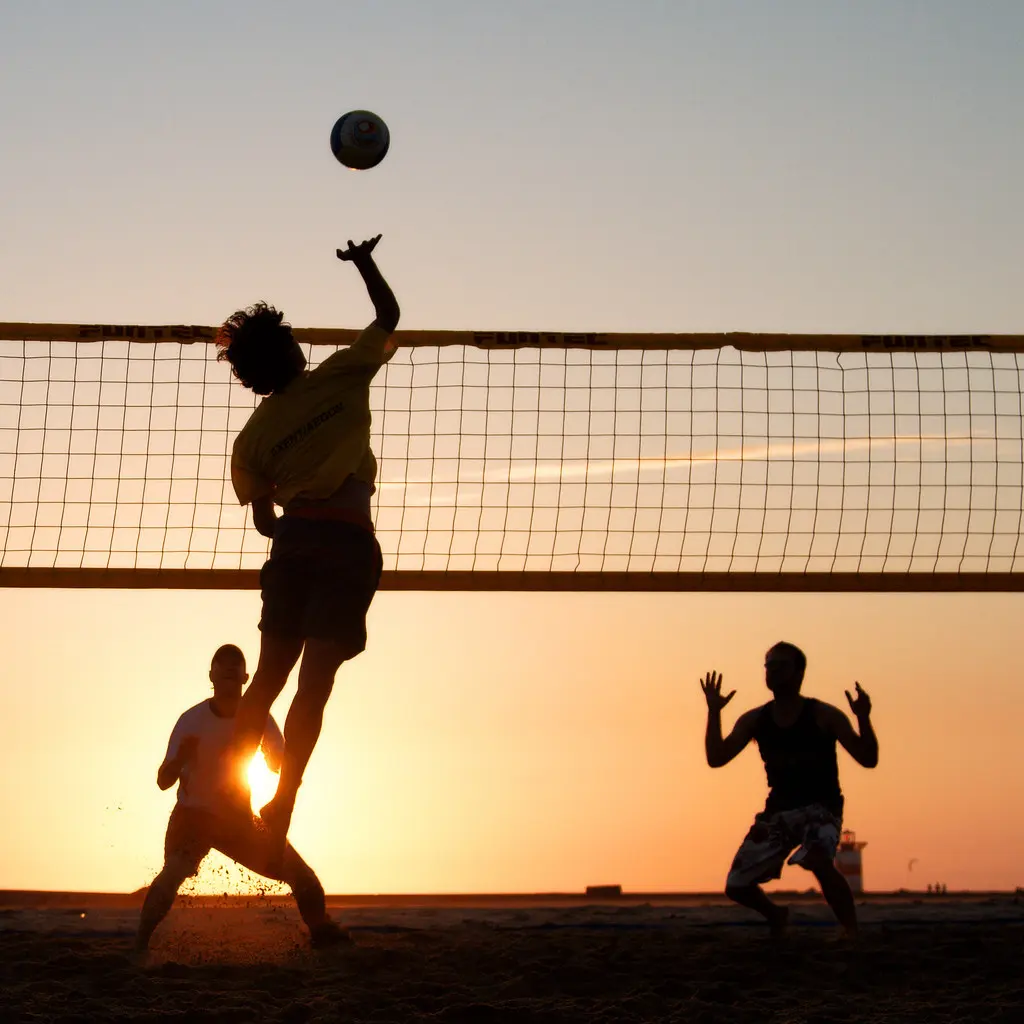
A beach volleyball is played at a lower pressure than an indoor ball, which is why it feels softer every time you pass it. The practical choice is how much soft touch you want against how much use, water and wind it has to put up with.
We compared types of ball rather than recommending specific models. To complete your court, see how to choose a portable net.
This guide explains types and criteria using public information; it doesn't recommend specific models. How we work.
Types compared
| Type | Best for | Main strength | Watch out for |
|---|---|---|---|
| Stitched competition ball | Weekly games and tournaments | Good touch | Higher price |
| Soft beginner ball | Beginners and families | Comfortable to receive | Less accurate in the wind |
| Water-resistant ball | Playing at the water's edge | Absorbs little water | Slightly less soft to the touch |
| Training ball | Clubs and long sessions | Made for heavy use | Less accurate in flight than a competition ball |
Each type explained
Stitched competition ball
Best if you want: Weekly games and tournaments
Soft cover and good touch. Only pay the difference if you'll actually notice it.
Pros
- Good touch
Watch out for
- Higher price
Soft beginner ball
Best if you want: Beginners and families
Very soft, so the first passes sting less.
Pros
- Comfortable to receive
Watch out for
- Less accurate in the wind
Water-resistant ball
Best if you want: Playing at the water's edge
Built to absorb little water so it doesn't get heavier when wet.
Pros
- Absorbs little water
Watch out for
- Slightly less soft to the touch
Training ball
Best if you want: Clubs and long sessions
Aims for a balance between durability and touch, without paying for a tournament ball.
Pros
- Made for heavy use
Watch out for
- Less accurate in flight than a competition ball
How to choose
Size, weight and pressure
The rules of the FIVB, volleyball's international federation, set a circumference of 66 to 68 cm, a weight of 260 to 280 g and an internal pressure of 0.175 to 0.225 kg/cm² (171 to 221 mbar). For a game with friends you don't need to be that precise, but do keep an eye on the pressure: check the figure the manufacturer gives and don't go above it.
Stitched or thermo-bonded
A stitched ball usually gives good touch, while a thermo-bonded one copes better with water and heavy use, at the cost of a slightly less soft feel.
Care
Rinse it in fresh water, dry it in the shade and check the pressure before you play. Heat can change it, so don't leave the ball in the sun. If you've brought it out from home, check the pressure again before your first game.
Buying in Spain
- Canary Islands, Ceuta and Melilla: they're outside the EU VAT area, so Amazon.es doesn't charge VAT there, but orders can be subject to local import or customs charges, take longer to arrive and need a Spanish tax ID (NIF) in the delivery address. Each seller also sets its own shipping restrictions, so check before you order.
- If you're staying in a hotel or holiday let, ask reception before using it as your delivery address, or choose an Amazon Locker or pick-up point when you check out.
- Sizes on Spanish listings are usually EU sizes. Check the brand's own size chart rather than assuming your UK size converts directly.
- For a week's holiday, hiring locally can work out better than buying, especially for boards and kayaks. Bulky kit also costs extra to fly home.
Verdict: which should you get?
If you play every week: a competition ball. If you're starting out or playing as a family: a soft one. If it's going to get wet: one that absorbs little water.
The trade-off: the softest balls tend to be less accurate in the wind. If you also play with your feet, compare with footvolley balls.
If you'll be playing on your own patch of beach, read how to set up the net too.
FAQs
Can I use an indoor volleyball on the beach?
You can, but it usually feels harder because it's played at a higher pressure. A beach ball is designed for sand and wind.
Sources
General guidance only. Always check the manufacturer's figures and the local rules where you are. See our legal notice.