Kitesurfing & windsurfingFor beginners
Kitesurfing and windsurfing: what to know before buying gear
Why to start at a school, what the kit is made up of and which wind to avoid.
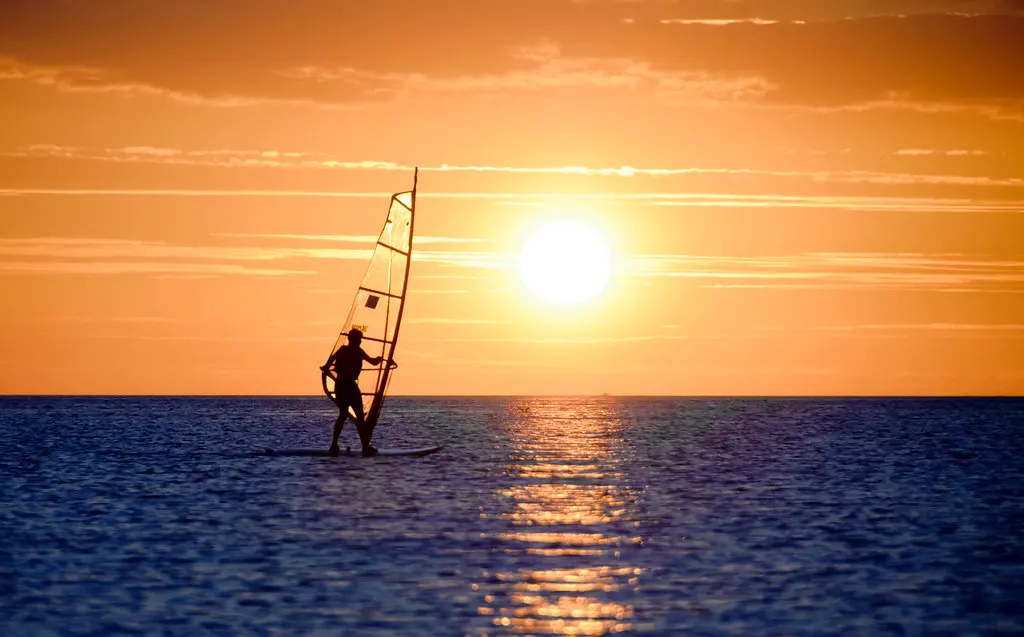
Don't buy kitesurfing or windsurfing gear before you've learned: the kit is expensive and what you need depends on your weight, your level and your local wind, so buying first often means paying twice. Kitesurfing adds a safety reason too: a kite generates a lot of power, and you need to learn to control it and let it go with someone beside you.
That's why we don't give size charts. This guide helps you understand what you're being offered and what to ask. If you're in Spain on holiday, a course with the school's kit is the way to start.
This guide explains types and criteria using public information; it doesn't recommend specific models. How we work.
Types compared
| Type | Best for | Main strength | Watch out for |
|---|---|---|---|
| Kite, bar and lines | Buying after a course, with your school's help | Compact kit | Technique and safety need proper training |
| Kiteboard | Your first runs | Widely used for teaching | You can't pick the size from a catalogue |
| Beginner windsurf kit | Starting windsurfing | Very stable | Bulky to transport and store |
| Harness | When your instructor says you're ready | Less tiring | Needs trying with your own kit |
Each type explained
Kite, bar and lines
Best if you want: Buying after a course, with your school's help
The engine of a kitesurfing set-up. Check it has a quick-release system and learn to use it before you go out on your own.
Pros
- Compact kit
Watch out for
- Technique and safety need proper training
Kiteboard
Best if you want: Your first runs
Twin-tip boards, which ride in both directions, are common for learning. The size depends on your weight and the wind: ask your school.
Pros
- Widely used for teaching
Watch out for
- You can't pick the size from a catalogue
Beginner windsurf kit
Best if you want: Starting windsurfing
A high-volume board and a small sail make it easier to pull up the sail and keep your balance.
Pros
- Very stable
Watch out for
- Bulky to transport and store
Harness
Best if you want: When your instructor says you're ready
Spreads the pull so you're not sailing on your arms alone. Size and type are best judged by trying it on.
Pros
- Less tiring
Watch out for
- Needs trying with your own kit
How to choose
Which one to start with?
They're different sports: the kit, the space you need and the way you learn all change. Try a lesson in each if you can, and ask a local school what conditions there are through the year. It's better to choose by what you can practise nearby than by what appeals most.
Which wind suits you
The school sources we looked at agree on avoiding offshore wind while you learn: it tends to be gusty and carries you away from the shore. One of them names cross-shore or cross-onshore wind as the most suitable, and warns that dead onshore wind isn't easy either, because of the breaking waves and the risk of being dragged up the beach. Reading each spot correctly is part of what you learn on a course.
What to ask before buying
What size would you use for my weight in the wind here? Is this release system in good condition and compatible with my kite? What protection do you recommend, such as a helmet or impact vest? Will you check it over before I pay? And if it's second-hand, what state are the canopy, lines and bar in?
Safety
Start at a school and ask there which conditions suit your level: the instructor has the final say. Don't go out in offshore wind: it can carry you away from the coast faster than you expect, and if it drops it isn't easy to get back. Practise using the quick release and the safety leash exactly as you're taught, before you ever need them. Conditions vary from beach to beach, so local rules and guidance always come before general advice.
Buying in Spain
- Canary Islands, Ceuta and Melilla: they're outside the EU VAT area, so Amazon.es doesn't charge VAT there, but orders can be subject to local import or customs charges, take longer to arrive and need a Spanish tax ID (NIF) in the delivery address. Each seller also sets its own shipping restrictions, so check before you order.
- If you're staying in a hotel or holiday let, ask reception before using it as your delivery address, or choose an Amazon Locker or pick-up point when you check out.
- Sizes on Spanish listings are usually EU sizes. Check the brand's own size chart rather than assuming your UK size converts directly.
- For a week's holiday, hiring locally can work out better than buying, especially for boards and kayaks. Bulky kit also costs extra to fly home.
Verdict: which should you get?
If you haven't had lessons: don't buy yet. After your course: ask your instructor to check what you're planning to buy. If you're not sure you'll keep at it: hire for a while.
For the rest of your kit, see how to choose a wetsuit and how to get the size right.
Once you have your own kit, learn how to protect it from salt water.
FAQs
Can I learn kitesurfing without lessons?
We don't recommend it. Kitesurfing carries real risks: a course is how you learn to control the kite and use its safety systems.
Should I buy second-hand kit?
It can save you money, but you can't see the condition and compatibility of the safety systems at a glance. Ask someone experienced to check it before you pay.
Sources
General guidance only. Always check the manufacturer's figures and the local rules where you are. See our legal notice.