Diving & snorkellingHow to choose
How to choose a snorkel mask
Mask and snorkel or full-face mask: the differences, the fit, and the safety questions worth knowing about.
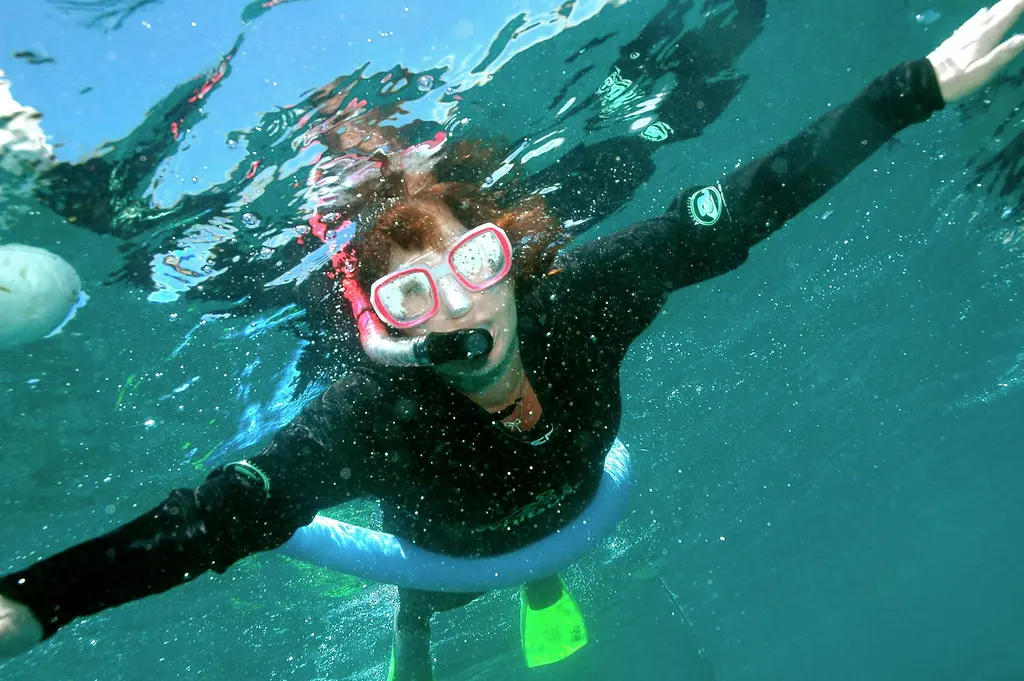
For most people, the best choice is a classic mask-and-snorkel set: breathing through your mouth takes some getting used to, but you can get rid of it in a second. A full-face mask feels easier at first, yet it's harder to pull off in a hurry and the safety questions around it haven't been settled.
Whether you're packing your own set for a holiday on the Spanish coast or hiring one at the beach, here's how the types differ, how to check the fit and what is known about the risks. We don't recommend specific models.
This guide explains types and criteria using public information; it doesn't recommend specific models. How we work.
Types compared
| Type | Best for | Main strength | Watch out for |
|---|---|---|---|
| Mask and snorkel set | Travel and regular snorkelling | You can remove the snorkel instantly | Breathing through your mouth takes getting used to |
| Full-face mask | Floating at the surface only, once you've read up on the risks | Breathe through your nose and mouth | Hard to take off in a hurry |
| Children's mask | Children who can already swim, within the age range the manufacturer gives | Fits smaller faces | Soon outgrown |
| Prescription mask | Short-sighted people who don't wear contact lenses | Clear vision without contact lenses | You need the right prescription for each eye |
Each type explained
Mask and snorkel set
Best if you want: Travel and regular snorkelling
The classic set-up: a separate mask and snorkel. It packs small and, if anything goes wrong, you can spit out the snorkel and breathe straight away.
Pros
- You can remove the snorkel instantly
- You can pinch your nose to equalise your ears
Watch out for
- Breathing through your mouth takes getting used to
Full-face mask
Best if you want: Floating at the surface only, once you've read up on the risks
Covers the whole face and has a built-in snorkel. Surface use only: it isn't safe for diving down, and it's harder to take off in an emergency.
Pros
- Breathe through your nose and mouth
- Wide field of view
Watch out for
- Hard to take off in a hurry
- Not for going underwater
Children's mask
Best if you want: Children who can already swim, within the age range the manufacturer gives
Designed for smaller faces, with a strap that's easy to adjust. Children should always be supervised in the water.
Pros
- Fits smaller faces
Watch out for
- Soon outgrown
Prescription mask
Best if you want: Short-sighted people who don't wear contact lenses
Fitted with corrective lenses, often interchangeable, so you can see clearly underwater. Check your prescription with an optician.
Pros
- Clear vision without contact lenses
Watch out for
- You need the right prescription for each eye
How to choose
Check the seal
No feature makes up for a mask that lets water in. The classic test: hold the mask to your face without the strap, breathe in gently through your nose and let go. If it stays put, it seals. A thick beard makes a good seal harder. Do the same test on a hired or borrowed mask before you get in. For full-face masks, use the manufacturer's size chart.
The snorkel matters too
Hawaii's snorkel safety study concluded that breathing resistance varies widely between snorkels and masks, can't be judged by eye and increases with effort. It advises avoiding mouthpieces with narrow sections and learning first with the simplest kit, in water where you can stand.
Anti-fog and materials
Follow the manufacturer's instructions to remove the factory film from the lens. A silicone skirt and tempered glass are standard on this type of mask. Rinse in fresh water after every swim and follow our tips on protecting kit from salt.
Safety
Hawaii's Snorkel Safety Study concluded that rapid-onset pulmonary oedema causes some snorkelling drownings, possibly most of them, and that risk factors include breathing resistance, certain health conditions and a recent long flight. Its advice: snorkelling is not risk-free; don't snorkel if you can't swim; always go with someone; if you have any doubts about your heart health, stay out of the water; consider waiting several days after a long flight; and keep an eye on the wind and currents. If you feel short of breath, stay calm, stand up, take off the snorkel or mask and get out of the water straight away. On full-face masks: doctors in Hawaii have warned of possible CO₂ build-up and breathing resistance, although it hasn't been shown that the masks caused those deaths. In 2018 Head/Mares commissioned tests in which its own mask passed and three budget masks from other brands failed to stay within the limit applied; the company paying for them had a commercial interest, and the results may not reflect current models. If you do use a full-face mask: at the surface only, without hard exertion, and in the right size.
Buying in Spain
- Canary Islands, Ceuta and Melilla: they're outside the EU VAT area, so Amazon.es doesn't charge VAT there, but orders can be subject to local import or customs charges, take longer to arrive and need a Spanish tax ID (NIF) in the delivery address. Each seller also sets its own shipping restrictions, so check before you order.
- If you're staying in a hotel or holiday let, ask reception before using it as your delivery address, or choose an Amazon Locker or pick-up point when you check out.
- Sizes on Spanish listings are usually EU sizes. Check the brand's own size chart rather than assuming your UK size converts directly.
- For a week's holiday, hiring locally can work out better than buying, especially for boards and kayaks. Bulky kit also costs extra to fly home.
Verdict: which should you get?
If you have no particular reason to choose otherwise: a simple, well-fitting mask-and-snorkel set that's easy to take off. For children: a mask their size, and constant supervision. If you're short-sighted: look at prescription masks.
What matters most is the seal, followed by being able to breathe without effort. If the water's on the cool side, see which wetsuit suits you too.
If you'll be swimming more than looking, compare with swimming goggles.
FAQs
Are full-face snorkel masks safe?
There's no settled answer. It hasn't been shown that they caused the drownings studied, but the Hawaii study flags them as a possible risk factor because they're hard to take off and you can't clear water from the snorkel by blowing.
Can I use a snorkel mask for scuba diving?
Not a full-face snorkel mask. For scuba diving, follow the advice of your dive centre or instructor.
How do I stop my mask fogging up?
Clean the lens as the manufacturer recommends, use anti-fog before you get in and avoid touching the inside with your fingers.
Sources
General guidance only. Always check the manufacturer's figures and the local rules where you are. See our legal notice.